Reference checks in Japan: what you can actually learn
If your HQ is outside Japan, someone there will ask before the final offer: did we do reference checks?
They usually mean the version they know. Call the former employer's HR, ask about performance, salary and why the person left.
In Japan, most of that won't work. You'll learn less than you expect, and some questions can get you in trouble.
What will a former employer tell you?
That the person worked there. That's usually it.
We've made plenty of these calls. HR will confirm the person was employed. Ask anything beyond that, performance or the reason for leaving, and you get the same line: we can't share any more personal information.
That isn't them being difficult. Under Japan's Act on the Protection of Personal Information, handing personal data to a third party generally needs the person's consent. If HR says too much and the candidate finds out, it's HR's problem. So the standard move is a polite no.
Salary works the same way. If you need to verify it, ask the candidate for their gensen choshuhyo, the year-end tax withholding statement. It's the normal way to do it here, and candidates rarely mind.
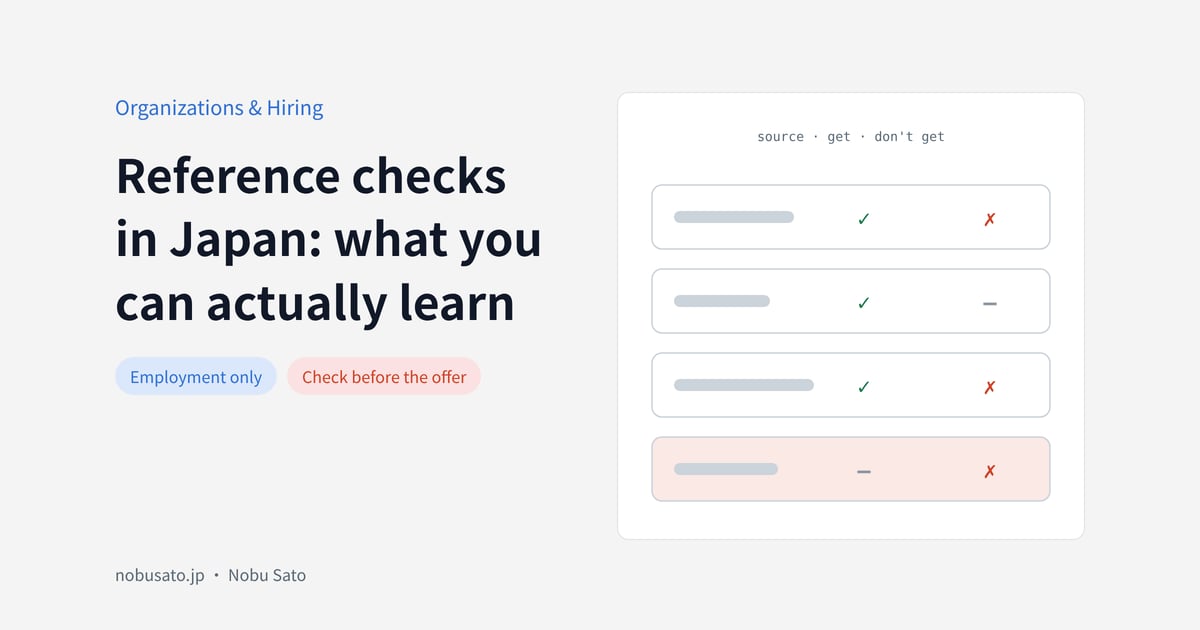
Fig.1In Japan a reference check mostly confirms facts: employment from the former employer, salary from the candidate, interview events from referees.
What can't you ask in Japan?
Article 5-5 of Japan's Employment Security Act and the Ministry of Health, Labour and Welfare guideline set clear limits. Collect only what the job requires. Don't collect race, ethnicity, social status, family origin, registered domicile, birthplace, beliefs or union membership. And collect from anyone other than the candidate only with the candidate's consent.
Questions some HQs treat as harmless, like family situation, marriage plans or whether someone plans to have children, are off the table. Japan's senior hiring market is small. A candidate mentions one bad call to a friend, and your company has a reputation.
Why do checks have to finish before the offer?
Because in Japan an offer is very hard to take back.
In the 1979 Dai Nippon Printing case, Japan's Supreme Court treated a job offer (naitei) as a formed employment contract. It can be withdrawn only for facts the company didn't know and couldn't reasonably have known when it made the offer, and only if withdrawal is objectively reasonable and socially acceptable. Whether something a referee said meets that bar is hard to call.
So check first, offer second. Do it the other way round and you'll probably have to live with what you find. The cost of living with it is real: replacing a country head in Japan usually takes six to twelve months, as I worked out in Two people at the top: when does it actually work?.
Fig.2Finish reference checks before the offer. In Japan an offer forms an employment contract, and withdrawing it needs an objectively reasonable reason.
What can referees tell you?
Whether the facts line up. Not whether the person is good.
Referees chosen by the candidate will speak well of them. “What is she like?” gets you very little.
I bring the events I wrote down in the interview. How big was the team on that project, who made the call, which part was hers, who pushed back. Referees rarely say anything negative, but you find out quickly whether the details match. It's the same idea as what I look for in an interview. The reference check is a second pass over the interview evidence. Don't expect it to find something new.
One question I ask every time: “If you had the chance, would you work with them again?”
Honestly, what comes back is usually tatemae, the polite public answer, not honne, what they really think. Few referees in Japan will tell a stranger on the phone that they wouldn't. So I ask, but I don't lean on the answer. The details of the events are what I trust.
Good references, weak execution
I got this wrong once.
Every referee spoke well of the candidate. After he joined, it turned out he was badly short on execution. Things we decided didn't move.
I don't think the referees lied. Being well thought of and being able to push something through are different things, and I didn't ask about them separately. Now I ask referees to pick one piece of work that needed real pushing, and tell me how it got done, where it got stuck and who finished it.
Why I don't do backchannel checks
Plenty of people trust the quiet coffee with someone who used to work with the candidate.
I don't do it. It's too risky.
The moment you ask, you've told someone the candidate is looking. You can't control where that goes, and nobody can predict what it does to their job or their life. Legally it's shaky too, since you're collecting personal information from a third party without consent.
What I haven't figured out
Referees chosen by the candidate lean their way. If the company picks them instead, you need consent, and most senior candidates are still employed. Their current boss doesn't know they're looking.
For a sitting executive, the person who knows them best is the one you can't call. I don't have a good answer for that yet.
Has a reference check in Japan ever told you something you really needed to know?
Shorter notes that don't make it into a full article go on LinkedIn. Follow me there.