Picking the wrong competitors is worse than having none
Every market research engagement starts the same way. The client hands me a competitor list. It's long, and it's full of the most famous names in the industry.
I put the list aside and ask one question. What exactly are you competing with these companies for?
Most people can't answer. If you can't, the list was ranked by fame. A list ranked by fame produces an industry encyclopedia, and an encyclopedia is not a decision input.
Why does a list full of big names hurt you?
Because it points attention and budget at the wrong places.
Ten companies on the list. You write a report on each, build the comparison table, and three months later the table looks great. Of those ten, maybe two actually come after your customers. Three others could supply you with people. The remaining five barely touch your business. They're just famous. Half the budget went into studying companies that will never affect you.
I've done exactly this. A few companies on my list had almost the same product as ours and the same target customers. If that isn't a competitor, what is? Only after the reports were done did I see it. Their customer acquisition was nothing like ours. Different channels, different way of reaching customers, different reasons deals closed. Nothing overlapped. A similar product doesn't mean you're fighting in the same market. The reports were thorough and nearly useless for the decision.
Worse, the big names pull your direction. You start wanting to do what they do, and their playbook was built for their size.
How do you screen competitors?
I use three tests. A company has to pass at least one to get on the list. Fail all three and it stays off, however famous.
One: talent overlap. Some roles at this company do the same kind of work as roles at yours. It's a source of candidates. The unit of analysis is role by company, not the company itself. Two businesses that look nothing alike can overlap heavily in sales.
Two: business threat. This company is taking your customers, or will. The unit is the head of that business line by company. I don't care how big the company is overall. I want to know who runs the part that threatens me, and in which team.
Three: control of access and resources. This entity doesn't take your customers and doesn't supply your people, but it decides whether you get to play and whether you get the biggest revenue line. Regulators, licensing bodies, platforms that control shelf space, suppliers that hold upstream quotas. They don't belong in a background paragraph. They belong in the middle of the list.
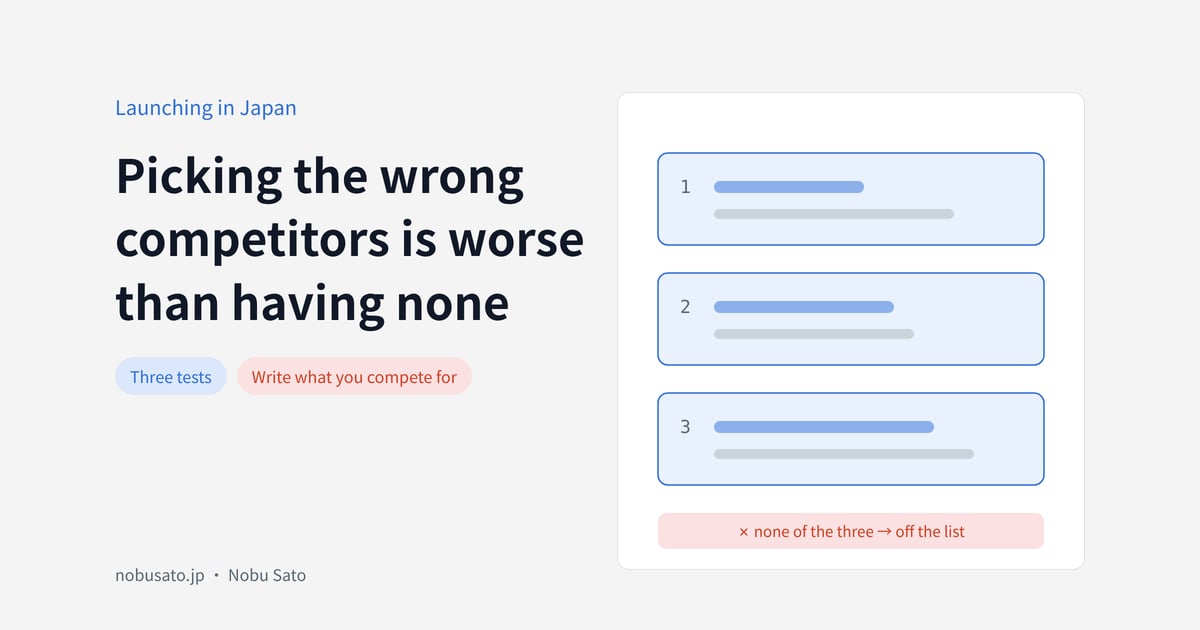
Fig.1Only three reasons put a company on the list. Write one next to every name.
The third test is the one people miss. Think in terms of competitors and nobody puts the regulator on the list. But in many industries one access decision changes the terms for every player at once, usually without warning and without a published standard.
Before you start, write one line: what we're competing for
The second test assumes you're competing for customers. True in most B2B settings. Not true everywhere. In some industries the players don't fight for customers at all. They fight for rankings, scarce talent, budget allocations or regulatory windows.
So above the table, I always write one line. What we're competing for in this study: X, Y, Z.
Without it, the second test spins. It degrades into listing every well-known peer. With it, you can explain why a company you never meet is on the list and a company you bump into at every customer isn't. That's exactly what went wrong in my own case. Similar product, similar customers, so I assumed we were fighting for the same accounts and never checked how they actually won them.
How do you prove the list is right?
Next to every company, write the reason it's there. The reason has to be one of the three tests.
That sounds trivial. It's the hardest constraint on the whole list. If you can't write a reason, the company got in on impression. Run a client's list through it and about half the names drop off, replaced by two or three companies the client has never heard of that are taking their customers every day.
Some companies stay on the list but get flagged: they aren't comparable on every dimension. An infrastructure supplier that never faces end customers makes no sense to compare on acquisition efficiency. Its moat is licenses and technology. A company that has already left the market goes in as a cautionary case, not a strategic player. Those differences are findings, not noise for the table to smooth out.
A signal people overlook: shared scarce resources
Once the list is set, I run one more check. Do the direct competitors depend on the same scarce resource controlled by a third party? The same infrastructure supplier, the same licenses, the same channel's shelf space, the same upstream quota.
If they do, two conclusions follow immediately. That capability is no longer a differentiator. It's rentable infrastructure. And the real moat has moved somewhere else, usually to the customer-facing experience and acquisition efficiency.
You also see the concentration risk. One systemic failure at the shared supplier and every competitor that depends on it stops, along with their customers.
This relationship usually shows up in the supplier's press releases, not the competitors'. The supplier has a reason to announce the win. The competitor doesn't. Search from the supplier's side.
Once the list is fixed, don't add to it
A confirmed list is the fixed scope for everything downstream. Each company gets a report on the same template, and the cross-comparison comes last.
Add a company halfway through and the comparison breaks. It's the most common cause of rework I see. Someone remembers a company, it gets added, the template doesn't fit, the fields don't line up, and by the end nobody can say what any cell in the table is based on.
Depth first, comparison second. It's slower than the other way round, and it's the only order that survives being questioned. What happens after the list, getting from companies to people, is in A talent map is not a list.
What I haven't worked out
The three tests settle who belongs on the list. They don't settle how long the list should be. Budget and time decide how many companies survive, and the same candidate list produces a different final set under a different budget. For now I write the budget at the top of the report next to the client's assumptions, so the screening parameters are explicit. How many is enough is still a judgment call every time.
How was your company's competitor list decided last time?
For the numbers on what actually makes Japan hard, see What foreign companies struggle with most in Japan.
Shorter notes that don't make it into a full article go on LinkedIn. Follow me there.